
What growth levers produce measurable results for a business in 2024? With the adoption of artificial intelligence, new service models, and the reshaping of value chains, the options are plentiful. Sorting through them deserves to be done based on concrete criteria: initial investment, speed of deployment, and potential profitability. Here are ten innovative ideas to boost your company’s growth, selected for their grounding in current market dynamics.
1. Integrate an explainable AI service for your B2B clients

European regulations are pushing companies to justify the decisions made by their algorithms. Offering a layer of explainable AI (which details the reasoning behind each recommendation) meets this transparency requirement. This is a positioning that very few providers occupy today.
According to Insee, 10% of companies in France used at least one AI technology in 2024, up 4 points from 2023. The demand for trust around these tools is growing faster than the supply. Integrating this skill into your business, even in the form of consulting, opens a B2B market that is still relatively unsaturated.
To explore business opportunities related to this type of positioning, you can access the Ideelogique website, which references several growing sectors.
2. Launch a digital twin offering for industrial SMEs

Digital twins (virtual replicas of physical equipment or processes) are no longer reserved for large corporations. Coupled with AI, they enable predictive maintenance and optimization of production lines accessible to smaller structures.
The profitable angle is to package this technology as a turnkey offering for industrial SMEs that lack the budget or internal skills to develop it on their own. The entry ticket remains high, but the recurrence of maintenance contracts more than compensates for the initial investment.
3. Create a marketplace for refurbished products in a short supply chain

The second-hand market has surpassed the trend stage. Generalist platforms dominate, but there is still room for specialized marketplaces by category (appliances, professional equipment, office furniture) with a local focus.
The short supply chain applied to refurbished products reduces logistics costs and creates a differentiation argument against industry giants. The investment focuses on the technical platform and building a network of regional suppliers.
4. Develop specialized professional coaching by sector

Online coaching has existed for years. What’s changing: corporate clients want coaches who understand their business, not generalists in personal development. A coach specialized in the digital transition of accounting firms or in managing technical teams charges significantly more than a generalist coach.
The model works with minimal investment (a certification, a video conferencing tool, a content strategy). Scalability then comes from creating complementary online training courses.
5. Offer a service for regionalizing supply chains

The regionalization of value chains is a fundamental movement, accelerated by geopolitical tensions and post-Covid supply disruptions. Many companies are looking to relocate part of their purchases without knowing where to start.
A consulting firm specializing in regional sourcing meets a concrete need: mapping local suppliers, negotiating contracts, auditing quality. This positioning affects both industry and food distribution or textiles.
6. Create a marketing agency for micro-video content

Short formats (under 60 seconds) dominate social platforms. Companies looking to capture their customers’ attention are heavily investing in this type of content but often lack internal skills.
An agency focused exclusively on micro-video content, with monthly packages including shooting, editing, and distribution, meets this demand. Margins are interesting as long as the production process is industrialized.
7. Sell certified cybersecurity training for very small enterprises
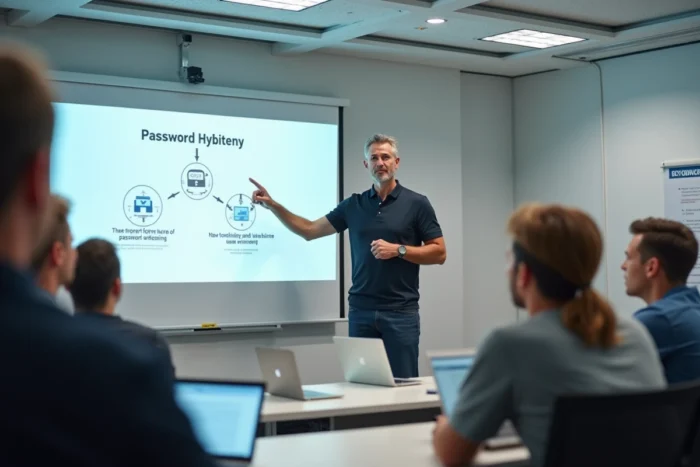
Cybersecurity remains a rapidly growing sector, but the training offer mainly targets large organizations. Very small enterprises, which represent the majority of the economic fabric in France, are often unprepared for digital risks.
A short, certified training offer tailored to the budgets of small structures fills a real gap. The online format reduces delivery costs, and funding from OPCOs facilitates the conversion of prospects.
8. Open a concierge service for short-term rentals

The short-term rental market continues to grow. Owners renting through online platforms lack the time to manage welcome, cleaning, and maintenance. A local concierge service, charged as a percentage of rental revenue, generates recurring income.
The initial capital remains low: a few cleaning supplies, professional insurance, and a reservation management system are sufficient. Profitability depends on the volume of properties managed, with a break-even point achievable with just a handful of mandates.
9. Launch a sustainable investment consulting business for SMEs

Extra-financial reporting obligations are gradually extending to medium-sized companies. Many SMEs do not know how to structure their CSR approach or how to direct their investments towards sustainable criteria.
A consulting firm specializing in CSR support for SMEs, with a pragmatic approach (initial audit, quantified action plan, quarterly follow-up), meets a demand that will mechanically increase with tightening regulations.
10. Develop a SaaS platform for multi-channel customer review management

Customer reviews directly influence purchasing decisions. Companies juggle between several platforms (Google, social networks, specialized sites) without a centralized tool to analyze and respond effectively.
A SaaS that aggregates, analyzes, and facilitates responses to reviews across all channels solves a concrete productivity problem. The monthly subscription model ensures recurrence, and the online services market offers solid growth potential for this type of product.
Among these ten avenues, those that combine low initial capital and recurring revenue (concierge services, SaaS, online training) present the best risk/return ratio. The growing adoption of AI in France, as measured by Insee, confirms that services related to artificial intelligence and data remain the segment where demand is growing the fastest.