When you open your closet at the beginning of the season, the question is never really “what to buy” but rather “what do I keep, what do I wear differently.” The autumn-winter 2026-2027 fashion trends, seen on the runways and then filtered through the reality of everyday life, confirm this approach: we focus on pieces that last, bold colors, and comfortable materials. All of this is within a changing European regulatory context that alters the game for both brands and consumers.
Bright colors this autumn-winter: burgundy, lime green, and sky blue replace beige
The first reflex when preparing your seasonal wardrobe is to check the palette. Burgundy, lime green, and sky blue are emerging as the key colors for this autumn-winter 2026-2027, far from the traditional beige and brown that were everywhere in previous years.
Practically, this means you can replace a black coat with a burgundy coat without risking a fashion faux pas. Burgundy works just as well with raw jeans as it does with tailored trousers. Lime green, bolder, is best used in accessories (scarf, bag, beanie) before daring to wear a statement piece.
To follow fashion trends on Mademoiselle C and identify the colors that work with your existing wardrobe, it’s recommended to start with what you already own. A sky blue sweater worn under a gray blazer transforms an office outfit without buying anything new.
Red, meanwhile, remains a classic of autumn. It is worn in touches (a belt, ankle boots, a fine turtleneck) rather than in a total look, unless you confidently embrace a bold style.

Oversized cuts and gender-neutral wardrobe: how to wear them daily
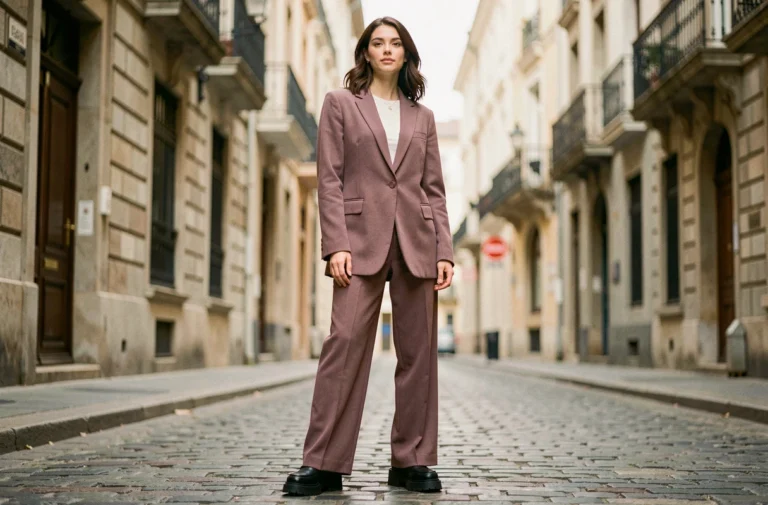
Oversized silhouettes are not new, but the way to wear them is evolving. We no longer talk about drowning in a blazer three sizes too big. The oversized look of 2026 is structured, with defined shoulders and a waist suggested by a belt or a play on proportions.
The men’s wardrobe is making its way into women’s looks more precisely than before. We borrow the Oxford shirt, pleated trousers, and suit vest, but pair them with more fitted pieces on the bottom or top to create contrast.
Three combinations that work in real situations
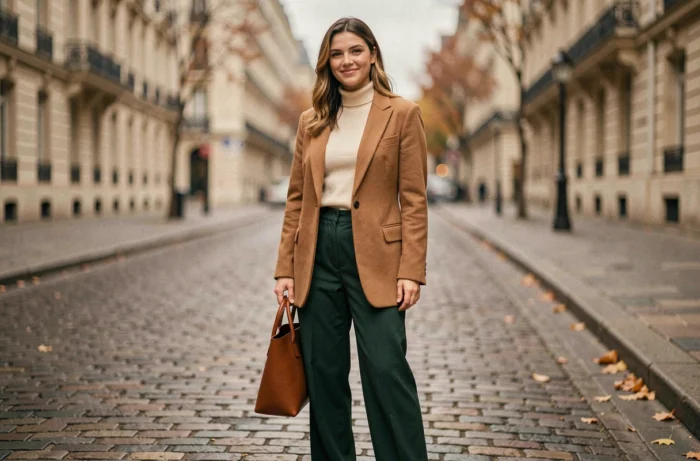
- Square-shouldered oversized blazer, worn open over a fine turtleneck and straight jeans: the office look that also works for an evening out without alterations
- Men’s white poplin shirt, tucked into a pleated midi skirt, with flat ankle boots: a balance between structure and fluidity that suits most body types
- Suit vest without a shirt underneath, paired with wide wool trousers: an outfit that plays the minimalist card without looking sloppy
However, we avoid piling on oversized pieces in the same outfit. One loose volume per look is enough to maintain a readable silhouette.
Autumn-winter materials and textures: focus on touch rather than labels
Fluffy materials (what runways call the “fluffy effect”) are gaining prominence this season. Mohair sweaters, curly faux fur jackets, oversized thick knit scarves: tactile comfort is becoming a style criterion in its own right.
On the ground, the recurring question is about maintenance. A blended mohair sweater costs less than a pure mohair one, but it pills faster. Checking the composition before purchase remains the best reflex to avoid disappointments after the third wash.
Opinions vary on this point: some high-end synthetic materials hold up just as well as natural fibers, provided they are washed in cold water and dried flat. We cannot generalize.

Key pieces to prioritize in natural materials
A blended wool coat (wool and cashmere, or wool and polyamide for durability) remains the best investment of the season. A ribbed knit dress, worn with opaque tights and ankle boots, carries through autumn and winter without going out of style.
Jeans, meanwhile, are not going anywhere. The barrel cut (wider at the thighs, tapered at the ankle) continues its rise. It is worn with an oversized sweater tucked in at the front, or with a structured blazer for a more dressed-up look.
European regulation and the end of unsold goods: what changes for consumers
Since July 19, 2026, large fashion companies operating in the European Union are no longer allowed to destroy their unsold goods, in accordance with the ESPR regulation (Ecodesign for Sustainable Products Regulation, 2024/1781). This ban covers clothing, accessories, and shoes.
For us consumers, the concrete effects are starting to show:
- Brands are producing more adjusted volumes, which reduces massive end-of-season sales on certain items
- Second-hand, donations, and refurbishment are developing as alternatives to destruction, with more in-store take-back programs
- The future digital clothing passport (Digital Product Passport), expected for 2027-2028, will document the composition, carbon footprint, and repairability of each item sold in the EU
Embracing the season’s trends no longer means accumulating. We are entering a mindset where buying less but better is no longer just a slogan; it is a regulatory constraint that reaches up to the runways.
The autumn-winter 2026-2027 style ultimately boils down to simple choices: bold colors, clean cuts, materials that we take the time to choose. The best trend is still the one you wear the following season.