
A cat that has been scratching its ear non-stop for three days, a dog that refuses its morning bowl, a rabbit whose claws are starting to curl: we often spot a problem when it is already established. Taking care of your pet daily starts with knowing how to observe, then acting on the right levers before the situation complicates.
Pet sitting and contractual obligations: what has changed in 2025
When entrusting your dog or cat to a professional sitter, the question of responsibility arises immediately. Since the decree of June 19, 2025, a signed contract is mandatory for any commercial pet-sitting service, with or without accommodation.
This contract must specify the sitter’s hours of presence, the care planned during the sitting period, and the protocol to follow in case of a veterinary emergency. Useful resources for guiding owners in this type of process can be found on boule-de-poil.fr.
Before entrusting your pet, check that the provider has a SIRET number and that they provide you with a written document. A sitter who refuses to sign a contract has no reason to do so, unless they do not want to take on their responsibility.
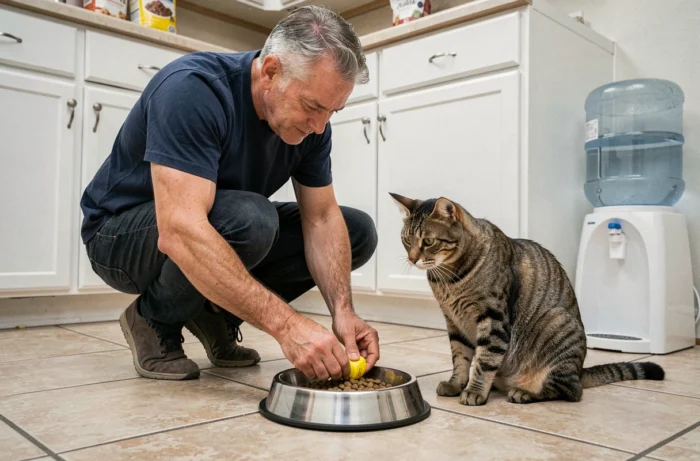
Diet suited to the age and activity of the dog or cat
The most common mistake observed is giving the same kibble to a four-month-old kitten and a ten-year-old neutered cat. Their needs for protein, fat, and minerals are nothing alike.
An active dog that runs for an hour a day needs a caloric intake significantly higher than that of a sedentary dog of the same weight. Adapting the ration to actual activity prevents overweight and deficiencies. Dietary transitions, when changing brands or types of food, should be done gradually over a minimum of one week to limit digestive issues.
Signs of an inadequate diet
- Dull, dry fur or excessive shedding outside of seasonal molting periods
- Chronic loose stools or alternating constipation/diarrhea
- Visible weight gain or loss over a few weeks without a change in activity
- Frequent scratching without the presence of parasites (may indicate a food intolerance)
Your veterinarian remains the best contact for adjusting the ration. The recommendations on kibble packages are averages, rarely suited to a specific animal.
Hygiene and parasites: concrete actions that change your pet’s health
We often talk about hygiene vaguely. In concrete terms, it starts with rinsing the dog with clear water after each swim in the sea, lake, or river. Salt and bacteria present in stagnant water can cause skin irritations if the fur is allowed to dry without rinsing.
For cats, cleaning the ears and eyes with a compress and an appropriate product (never a cotton swab) is sufficient in most cases. Long-haired cats require regular brushing to avoid knots that pull on the skin and promote infections.
Parasite treatment: frequency and method
Fleas and ticks should be treated at regular intervals, usually every month during warm periods. Inspecting your pet after each walk allows you to remove a tick before it transmits a disease. A tick remover costs a few euros and can be used in seconds.
Wormers should be given several times a year for an adult, more frequently for a puppy or kitten. Recommendations vary on the appropriate frequency depending on the animal’s lifestyle (strictly indoor or outdoor access), hence the importance of coordinating the protocol with your veterinarian.

Access to veterinary care: an underestimated geographical constraint
We rarely think about the availability of a veterinarian when everything is going well. The disparities between departments regarding access to veterinary care are significant. In some rural areas, the nearest clinic is more than half an hour away by car, complicating preventive follow-up (vaccinations, health check-ups, dental cleanings).
Anticipating the choice of veterinarian before an emergency is one of the reflexes to adopt as soon as the animal arrives. Also identify the nearest emergency clinic for weekends and holidays.
Veterinary telemedicine remains legally limited in France. After the end of the experiment launched in 2020, online platforms can provide advice but cannot diagnose or prescribe treatment remotely. For any suspicion of illness, a physical consultation remains the norm.
Behavioral well-being: stimulating a pet daily
A dog that destroys cushions or a cat that bites for no apparent reason often expresses a lack of stimulation. Physical exercise alone is not enough: mental stimulation reduces destructive behaviors as much as walking does.
For a dog, search games (hiding a treat in a sniffing mat or under cups) engage its sense of smell and concentration. For a cat, a simple box with holes and a ball inside provides effective enrichment without investment.
- Vary the dog’s walking routes to renew olfactory stimuli
- Install high points for the cat (shelves, cat tree) to respect its need for observation
- Plan interactive playtime every day, even short, rather than one long weekly session
Socialization also matters. A dog that has never encountered other dogs after its first four months of life will have more difficulty managing encounters. Gradually exposing the animal to varied situations, without forcing, builds its confidence.
Taking care of a pet daily relies on simple but regular actions: observing changes, adapting the diet, maintaining parasite and veterinary follow-up, and stimulating behavior. The pet-sitting contract established since 2025 adds an extra layer of protection when you need to be away. It is these concrete habits, repeated tirelessly, that make a difference in the lifespan and quality of life of the animal.