A dog left alone for ten hours a day without a break, a closed cage from morning to evening, low-cost kibble served in a hurry: sometimes we think we are doing the right thing while the dog’s daily life has deteriorated without us realizing it. Taking care of your dog on a daily basis means first adjusting your habits to the real constraints of the animal, not following a list of good intentions.
Dog’s solitude time: a physiological limit to respect
According to an article from Pause Maison (Ouest-France) dated August 10, 2026, the isolation capacity of a healthy adult dog is limited to about six hours. Beyond that, chronic stress sets in, with measurable consequences on behavior: destruction, barking, and soiling.
Leaving a dog alone for ten hours a day without a break can now be classified as a failure to ensure animal welfare. For those who work full-time, this requires rethinking the organization: having a neighbor check in at noon, hiring a dog-sitter, or adjusting remote work on certain days.
Concrete suggestions can be found on Amazing Pet Place’s dog advice to adapt your schedule to your pet’s real needs.
The key point to remember: a dog that seems calm in your absence is not necessarily well. Apathy can sometimes be a sign of resignation, not comfort. Observing their behavior upon your return (excessive excitement, panting, avoiding eye contact) provides reliable clues.

Cage and living space: what has changed in 2026
According to the Tribunal du Net (September 4, 2026), the new animal welfare standards have eliminated ambiguity regarding the use of cages for dogs. Prolonged confinement in a cage for several hours in a row is now prohibited.
Authorities recommend opting for a secure room, spacious enough for the dog to walk, lie down comfortably, and have free access to water. In practice, this means that the cage can still be used for transport or as an open refuge, but no longer as a tool for managing absence.
Setting up a secure room
You don’t need a large house to provide a proper space. A room of a few square meters is sufficient, provided a few points are respected:
- Remove electrical cables, cleaning products, and breakable objects within muzzle height
- Keep a clean water bowl accessible at all times, not just during mealtime
- Place a comfortable bed away from drafts and direct heat sources
- Provide a chew toy to occupy periods of solitude without risk of ingestion
Opinions vary on the usefulness of surveillance cameras, but they at least allow for detecting a problem (prolonged whining, abnormal immobility) and intervening remotely.
Dog food: quality of ingredients over brand
The majority of competitors recommend a “balanced diet” without specifying what that means concretely. Let’s go further.
Read the composition before the marketing
On a bag of kibble, ingredients are listed in descending order by weight. The first ingredient should be a specific source of animal protein (dehydrated chicken, salmon, lamb), not a vague mention like “animal by-products” or “processed animal proteins”.
Cereals in the first or second position indicate a product with low nutritional density. This doesn’t mean all grains should be banned, but they should not form the basis of a carnivore’s meal.
Frequency and quantity
An adult dog generally eats in one or two meals per day. Splitting into two meals reduces the risk of gastric torsion, especially in large breeds. The quantity depends on the target weight (not the current weight if the dog is overweight), activity level, and age.
Weighing the portion with a kitchen scale remains the most reliable action, much more than the measuring cup provided by the manufacturer, which is often inaccurate.

Dog hygiene care: realistic frequencies
It is often said that you should brush your dog’s teeth every day. In practice, few owners manage to do this. Rather than aiming for an unattainable ideal, here is a realistic rhythm that already protects the animal well.
- Tooth brushing: two to three times a week with an enzymatic toothpaste for dogs (human toothpaste contains fluoride, which is toxic to them)
- Ear cleaning: once a week for breeds with floppy ears (cocker, basset), every two weeks for others
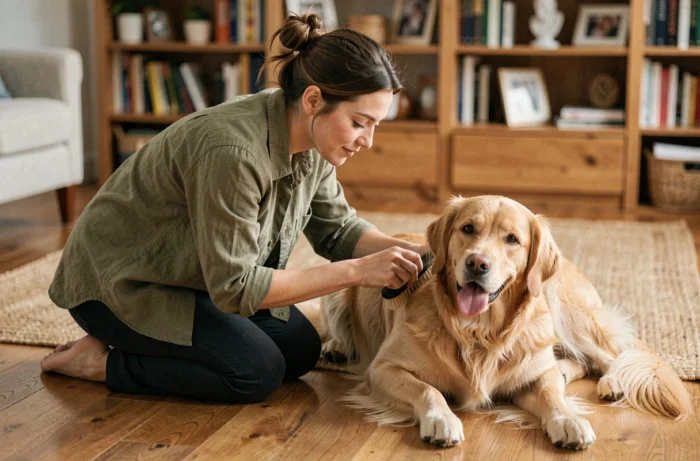
- Coat brushing: varies by breed, but weekly brushing detects ticks, scabs, and irritations before they worsen
- Bathing: no more than once a month unless there is significant dirt, to preserve the skin’s lipid film
The most useful daily reflex is not a specific care routine, but observation. Running your hands over your dog’s body every evening for two minutes allows you to spot a lump, a painful area, or a parasite much earlier than an annual vet visit.
Dog physical exercise: adapting intensity to breed and age
A three-year-old border collie and an eight-year-old French bulldog do not have the same needs. Forcing a brachycephalic dog to run in hot weather can cause heatstroke in just a few minutes.
For most medium-sized adult dogs, two thirty-minute outings per day cover the minimum. What matters more than duration is quality: allowing the dog to sniff freely stimulates its brain as much as an hour of brisk walking.
Olfactory search games (hiding treats in the garden, using a sniffing mat) effectively complement walks, especially on bad weather days when outings are shorter.
Adapting your dog’s daily care to new regulatory constraints and the practical realities of each household requires some adjustments, not a complete overhaul. The most effective approach is often the simplest: observe your pet every day, adjust what isn’t working, and accept that some routines evolve with the dog’s age.