
How to distinguish renovation projects that truly transform a home from those that are merely cosmetic refreshes? With the recent focus of public aid on comprehensive renovations, the rise of summer comfort as a design criterion, and the evolution of materials, the decision-making process is no longer the same as it was two years ago. This article compares the areas of work that have the most impact on comfort, property value, and the actual budget after subsidies.
Comprehensive renovation or incremental work: a comparison of approaches in 2026
Since September 1, 2026, energy renovation aids have been redirected. Isolated works (incremental) are only eligible for certain heating installations, while comprehensive renovation pathways maintain broader access to subsidies. This shift changes the planning logic of a construction site.
| Criterion | Incremental Work | Comprehensive Renovation |
|---|---|---|
| Available Aids (2026) | Limited to certain heating equipment | Pathway maintained, broader scope |
| Out-of-Pocket Expenses | Variable, often moderate per item | Potentially high despite subsidies |
| Energy Gain | Partial improvement (one item) | Possible leap of several energy performance classes |
| Complexity of the Project | Short intervention, one trade | Multi-lot coordination, longer duration |
| Property Valuation | Low impact on overall rating | Direct impact on resale value |
Estimating the complete project and its financing before choosing finishes remains the strongest recommendation to avoid an interrupted project due to budget constraints.
To compare solutions and ranges of materials suitable for each item, you can explore Batiwiz’s home page to identify products compatible with a comprehensive renovation pathway.
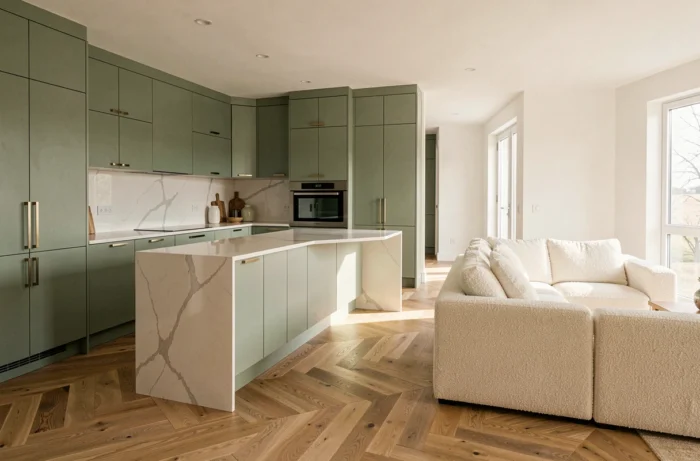
Summer Comfort in Renovation: An Underestimated Aspect of Projects
Online competitors extensively detail color palettes, rounded shapes, or home automation. However, a nearly absent angle in this content concerns a rising priority: summer comfort has become a full-fledged renovation criterion. According to data reported by Actu.fr in October 2026, homeowners are increasingly valuing indoor temperature during hot periods, following repeated heatwaves.
Relying solely on air conditioning addresses the symptom. Passive solutions, integrated from the project’s design phase, offer a different cost-effectiveness ratio:
- External solar protections (adjustable sunshades, projecting shutters) reduce heat gain before it penetrates the glazing, limiting overheating without electrical consumption.
- Insulating attics and walls from the outside also works in summer: a well-insulated wall slows the penetration of daytime heat indoors.
- Cross ventilation or mechanical ventilation (double-flow VMC) renews the air without opening windows during peak heat, maintaining the coolness accumulated at night.
Incorporating this aspect into a comprehensive renovation pathway allows for cost-sharing: thermal insulation improves both winter and summer comfort, enhancing the coherence of the aid application.
Sustainable Materials and Interior Design: What Affects the Actual Budget
Raw wood, natural stone, and bio-sourced materials are returning in the majority of renovation projects. Their purchase cost is often higher than synthetic alternatives, but their lifespan and thermal performance change the long-term calculation.
Wood, Stone, Recycled Materials: Technical Trade-offs
Solid wood used for flooring or structure remains a common choice for living spaces. Its ability to regulate indoor humidity contributes to comfort without additional equipment. Stone, used as cladding or kitchen countertops, provides useful thermal inertia in regions with high temperature fluctuations.
Recycled and bio-sourced materials are gaining ground in insulation (cellulose wadding, wood fiber) as well as in finishes (tiles made from recycled glass, low-emission paints). Their main measurable advantage is the reduction of the project’s carbon footprint, a criterion that some local authorities are beginning to integrate into their aid programs.
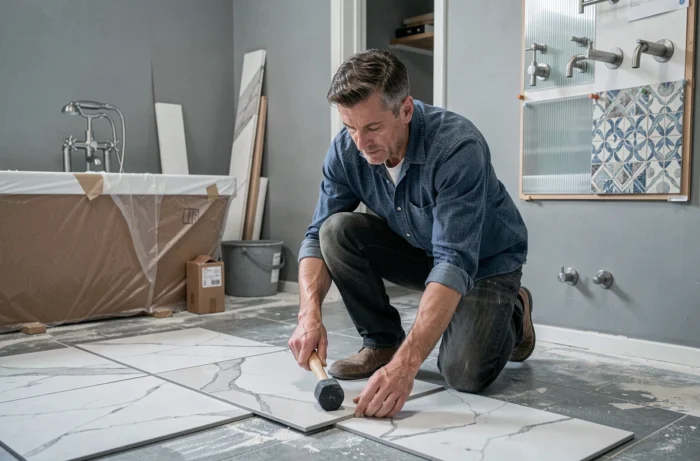
Kitchen and Bathroom: The Areas Where Material Choice Matters Most
In renovation, the kitchen and bathroom account for a significant portion of the total budget. In these two rooms, the choice between a laminate countertop and a stone or solid wood countertop can represent a significant cost difference. The return on investment depends on the expected duration of occupancy: beyond ten years, noble materials withstand wear and humidity cycles better.
For the bathroom, large-format coverings (tiles, waterproof wall panels) reduce the number of joints, simplifying maintenance and limiting the risk of infiltration.
Energy Renovation Aids: Check the Rules Before Starting the Project
The analysis by L’Institut Paris Region published in October 2026 confirms an underlying trend: eligibility conditions for aids frequently change, sometimes mid-year. Homeowners planning a multi-month project must check the rules in effect at the time of application submission, not at the time of the initial estimate.
A couple from Normandy, whose case was reported by Ouest-France, carried out insulation work thanks to state aid and achieved an energy gain from class E to class C. This type of performance leap is typical of a well-sequenced comprehensive renovation, but it assumes that the financing plan has been finalized in advance.
The choice of a local craftsman, often labeled RGE (Recognized Environmental Guarantee), conditions access to most aid programs. It is also a lever to shorten project timelines and facilitate monitoring, a factor that online simulators do not take into account.
The aspect that today differentiates a high-performing renovation project from a mere facelift is the ability to articulate thermal comfort (winter and summer), choice of sustainable materials, and realistic financial planning. Decorative trends come and go, but energy bills remain.