
Health remains the number one concern for the French, purchasing power generates constant anxiety, and the prevailing pessimism has reached rarely measured levels. These social issues are not abstract: they affect the daily lives of millions of people, from housing to access to care to employment. Understanding their mechanisms allows us to identify the levers of action that work, both at the individual and collective levels.
Record pessimism and mental health: the social climate in 2026
Have you noticed that the general atmosphere seems heavier than it was ten years ago? Opinion polls confirm this. According to the Ifop-Fiducial opinion poll published in September 2026, only 18% of the French say they are optimistic about the future, a historic low.
This figure reflects a deep malaise. It is not just a seasonal blues, but a trend that has been established for several years. The feeling of downward mobility, fear of inflation, and political uncertainty fuel this gloom.
In the same survey, health is deemed a priority by 86% of respondents, leading concerns since 2019, ahead of education and purchasing power. To delve deeper, social solutions on cc-soultzerland.fr details the concrete avenues associated with each of these issues.
Mental health has become a social issue in its own right. Anxiety related to the economic context, post-pandemic isolation, and information overload create a cocktail that affects all age groups. Public systems struggle to keep up with the demand for psychological consultations, and waiting times for follow-ups remain very long in most areas.
Poverty and inequalities: what the Solidarity Pact 2024-2027 changes
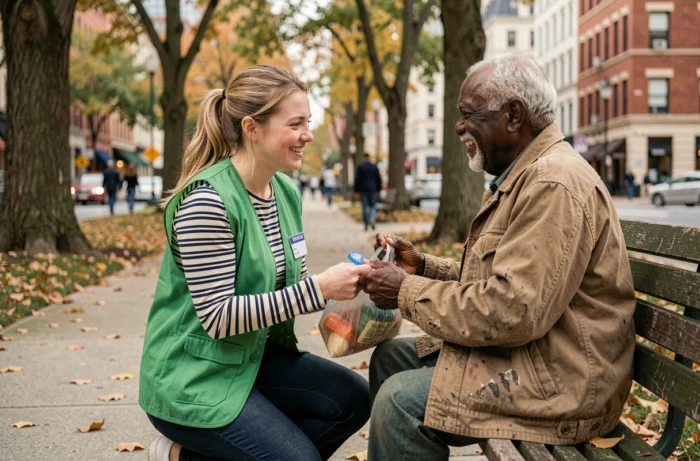
The fight against poverty in France has recently taken a turn with the launch of the Solidarity Pact for the period 2024-2027. This initiative replaces the previous National Strategy for Prevention and the Fight Against Poverty. Its structure is based on four priority axes:
- Prevention of poverty and the fight against inequalities from childhood, targeting access to school meals, supplies, and extracurricular activities
- Amplification of the employment access policy for all, with a focus on groups distanced from the labor market
- Combatting severe exclusion, particularly through the strengthening of emergency housing and social support
- Solidarity ecological transition, aiming to ensure that environmental efforts do not weigh more heavily on the most modest households
The advantage of this approach is that it does not limit itself to distributing financial aid. It seeks to act upstream, before situations deteriorate. A child who eats properly at school and has access to tutoring is statistically less likely to fall into precariousness in adulthood.
The challenge remains funding. In a context of high public debt, balancing solidarity and budgetary constraints has become a permanent political exercise. Local authorities, on the front lines to implement these measures, regularly report a gap between the ambitions of the Pact and the resources actually transferred.
Discrimination and social ties: the blind spots of public policies
Discrimination based on origin, gender, sexual orientation, or disability constitutes a persistent social problem. These issues are often treated superficially in public debate, without a real structured action plan.
Why do these topics remain sidelined? Because discrimination is difficult to measure on a large scale. Unlike unemployment rates or poverty levels, there is no unique and consensual indicator. Testing (sending identical CVs with different names) reveals clear hiring disparities, but these operations remain isolated.
Social ties, on the other hand, are weakening due to several combined factors. Isolation particularly affects elderly people in rural areas and young adults in densely populated urban areas. The paradox is that digital communication has never been more accessible, while also producing new forms of solitude.
Local initiatives that yield results
Large metropolitan areas are experimenting with local social intervention programs. France Urbaine reports that urban areas face growing challenges in social action, but also that the most effective responses often emerge at the neighborhood level.
A social center that offers both employment support, access to care, and a space for social interaction simultaneously addresses multiple issues. This cross-cutting approach, still a minority, shows that compartmentalizing responses (one office for housing, another for health, a third for employment) slows down assistance.

Climate transition and energy poverty: an underestimated social problem
The ecological transition is often presented as an environmental issue. It is also, and perhaps primarily, a social problem. Energy poverty primarily affects the most modest households, those living in poorly insulated housing and spending a disproportionate share of their income on heating.
Thermal renovation policies exist, but their pace remains insufficient compared to the scale of the housing stock involved. Financial aid (MaPrimeRénov’ and local schemes) requires upfront cash and complex administrative procedures, which effectively excludes the most vulnerable populations.
Climate change also exacerbates territorial inequalities. Heatwaves hit dense city centers and working-class neighborhoods harder, where greenery and building quality are lower. Solidarity in the face of climate disruption requires adapting the most exposed territories.
None of these social problems will be solved by a single measure. Poverty, discrimination, energy poverty, and the deterioration of mental health feed into each other. The systems that work share a common point: they intersect responses instead of stacking them, and they rely on grassroots actors rather than top-down logics.