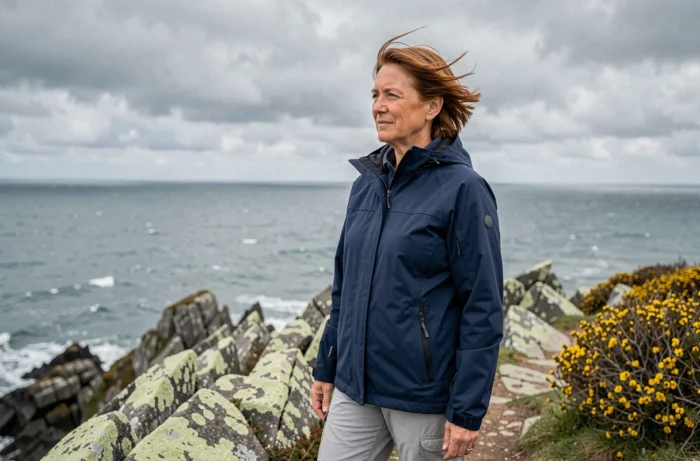
Brittany boasts a density of outdoor activities and cultural leisure that few other French regions can match in comparable space. With a rugged coastline stretching for hundreds of kilometers, a network of navigable canals, and state-owned forests accessible year-round, the playground far exceeds the typical seaside postcard. Here, we take stock of the leisure sectors worth noting, from supervised water activities to accessibility options that remain too unknown.
Local regulations for recreational fishing in Brittany: a framework by department
Sea recreational fishing remains one of the most practiced leisure activities along the Breton coast. We observe that most tourist guides mention it without ever detailing the regulatory framework, which varies from one department to another.
The prefectural summary of Finistère reminds us that recreational fishing from a boat, on foot, while swimming, or diving is regulated department by department. Authorized and prohibited zones can change over just a few hundred meters of coastline, with specific restrictions around bathers, beaches, and certain Natura 2000 classified areas.
Before stepping onto the foreshore with a rake or launching a boat in Morbihan, we recommend consulting the current prefectural orders. The minimum size of catches, prohibited periods, and quotas per species differ between Finistère, Côtes-d’Armor, and Ille-et-Vilaine. Ignoring these specifics exposes one to fines and spoils the outing.
For those looking to explore the leisure activities offered on Jeune Bretagne, this regulatory verification step is an integral part of the preparation, alongside checking the weather or tide.
Water activities in Brittany: beyond paddleboarding and kayaking
Stand-up paddleboarding and sea kayaking dominate the showcases of Breton nautical schools. They serve as effective entry points, but the region offers much more segmented practices that cater to every age group.
Group sailing and accessible sailing
Several Breton ports offer outings on collective sailboats accessible to beginners. The principle: embark with about ten passengers, participate in maneuvers under the supervision of a skipper, and discover sailing without owning a boat or a license. The Côte de Granit Rose, for example, has such options, allowing families with children as well as retirees to steer a sailboat for a trip.
Surfing and wave sports
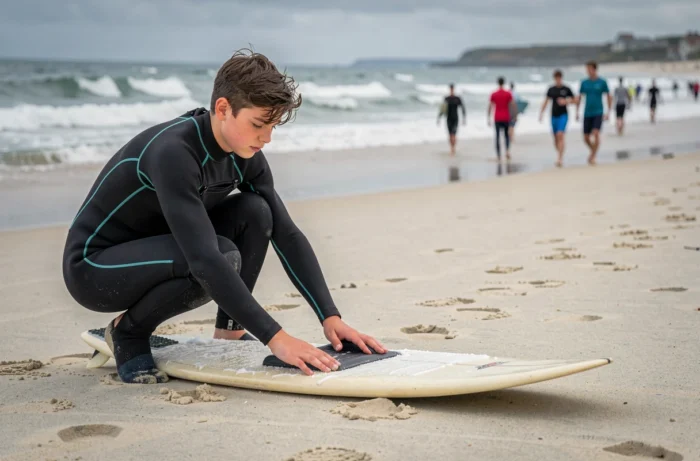
The surfing spots in Finistère and Morbihan attract a young audience, but bodyboarding and longboarding remain underutilized for teenagers and adults returning to activity. Breton surf schools often offer specific slots by level, which avoids chaotic cohabitation between beginners and experienced surfers on the same wave.
Accessible tourism in Brittany: a selection criterion, not a decorative label
The accessibility of Breton leisure activities has changed status in just a few years. It is no longer a marketing argument mentioned at the bottom of the page, but a documented selection criterion by the tourist offices themselves.
Dinard Côte d’Émeraude Tourism distributes brochures for 2026 explicitly dedicated to tourism and disability. On the side of Quimperlé Community, visit paths have been tested with wheelchairs, and materials in Easy to Read and Understand (FALC) are available for audiences with cognitive disabilities.
In practical terms, this means that families accompanying a person with reduced mobility or a child with a disability now have verified itineraries on the ground. We recommend contacting local offices directly to obtain these documents, as they are not always visible on websites.
- Tested hiking trails in a wheelchair in the Quimperlé region, with indications of surface type and elevation
- Brochures in FALC to facilitate understanding of visit routes for people with mental disabilities
- Programs labeled Tourism and Disability in Dinard, covering the four disability categories (motor, visual, auditory, mental)
Slow leisure in the Breton countryside: yoga, sensory walks, and bivouacking
So-called “slow” leisure activities are gaining visibility in the Breton tourism offer. Outdoor yoga, sensory walks in the forest, and guided nature outings respond to a growing demand from adult and senior audiences who do not identify with adventure parks or water sports.
Bivouacking, another growing practice, remains regulated. The rules differ between state-owned forests, coastlines, and private property. Pitching a tent on the wild coast without checking municipal orders can be costly. Several platforms now list authorized natural bivouac areas in Brittany, making preparation easier.
For families with young children
Sensory walks provide a relevant alternative to traditional amusement parks. The child explores nature at their own pace, without waiting in line or artificial stimulation. Several forests in central Brittany, around Pontivy and the Rohan area, are particularly suited for this type of outing thanks to short, easy-to-navigate marked trails.
Sports and nature with family: treetop adventure, cycling, and coastal hiking
Treetop adventure remains a classic of Breton vacations, with courses suitable for children as young as three or four in most parks in Morbihan and Côtes-d’Armor. The point to check: the supervision ratio and the continuous lifeline system, which varies from provider to provider.
The network of greenways in Brittany, developed on former railway lines and along canals, offers a flat and safe terrain for family cycling. The Nantes to Brest canal crosses central Brittany over a considerable distance, with lock stops converted into welcome points. It is one of the few French cycling routes where three generations can ride together without elevation changes posing a problem.
Coastal hiking on the GR 34, the customs path, remains the backbone of walking leisure in Brittany. Some sections require a good physical level, while others are suitable for all-terrain strollers. Checking the elevation profile of the chosen section avoids unpleasant surprises with young children or occasional walkers.
Brittany is not lacking in leisure activities. What is often missing is precise information on access conditions, local regulations, and real adaptations for different audiences. Taking the time to verify these points before setting off transforms an ordinary outing into a successful experience, regardless of the participants’ age.