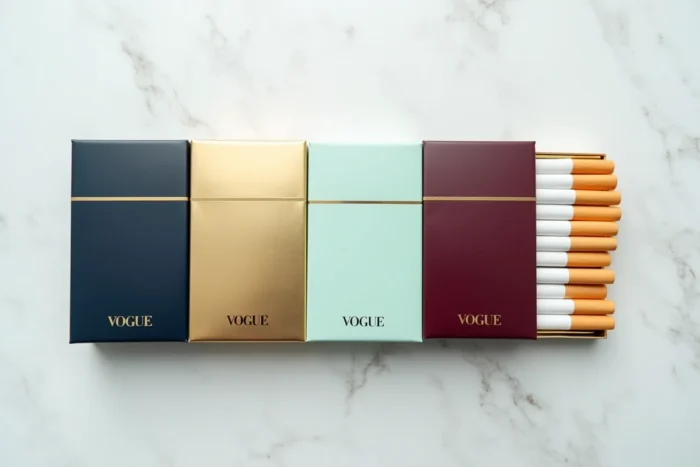
Each Vogue cigarette pack features a distinct color, ranging from pale blue to lilac, ivory, or mint green. These shades are not just a marketing gimmick. They indicate technical differences in the filter design and tobacco blend, which directly affect the perceived smoothness, throat hit, and aftertaste.
Understanding what each color represents in terms of sensations allows one to decode what the tobacco industry communicates without ever clearly stating it on the pack.
Vogue Filter Ventilation: The Mechanism Behind Each Color
The technical parameter that most distinguishes the Vogue variants from one another is the filter ventilation rate. Each color corresponds to a number and diameter of micro-perforations in the filter, which allow more or less air to enter with each puff.
The higher the ventilation, the more the inhaled smoke is diluted by ambient air. The result: a smoother sensation, a milder throat hit, and a lower smoke temperature. Conversely, reduced ventilation concentrates the smoke, intensifies the flavor of blonde tobacco, and enhances the perception of the hit.
This mechanism explains why two Vogue cigarettes containing a comparable nicotine level can produce radically different sensations. The color of the pack serves as an indirect indicator of this ventilation, without the smoker needing to know the technical specifications. A guide detailing the taste differences between Vogue cigarettes confirms this correlation between color and filter design.
| Pack Color | Filter Ventilation | Perceived Smoothness | Throat Hit | Aftertaste |
|---|---|---|---|---|
| Blue / White | High | Strong | Mild | Light, not persistent |
| Lilac (Slims) | Medium to High | Moderate to Strong | Medium | Subtle, slightly floral |
| Green (Mint) | High | Very Strong (menthol effect) | Fresh, masked | Dominant mint |
| Ivory / Silver | Reduced | Low | Marked | Pronounced tobacco |

Flavor and Nicotine Level: Why Pastel Color Doesn’t Mean Less Risk
The lighter variants (blue, white, lilac) give the impression of a lighter product. This perception is reinforced by the superslim format, the reduced diameter of the cigarette, and the pastel aesthetic of the pack. Smokers instinctively associate soft colors with lower harm.
This association is misleading. Ventilation dilutes the smoke but does not reduce overall toxicity. Smokers naturally compensate by inhaling harder or more frequently to obtain the nicotine dose their body expects. This phenomenon, documented in public health, largely negates the apparent benefit of a more ventilated filter.
The darker or silver variants, perceived as stronger, simply deliver the smoke in a less diluted manner. The flavor of blonde tobacco is more direct, and the aftertaste is more persistent. The sensory experience differs, but the health risk profile remains comparable.
What Color Really Changes in the Mouth
The taste receptors of regular smokers are already altered by chronic exposure to smoke. Therefore, the perception of flavor between two Vogue variants relies more on physical signals (temperature, hit, menthol freshness) than on a strict difference in taste.
- High Ventilation Variants (blue, white): the smoke arrives cooler, the palate detects less bitterness, and the overall sensation is described as “smooth” by consumers
- Menthol Variants (green): the addition of menthol stimulates cold receptors in the throat, partially masking irritation and creating an illusion of additional smoothness
- Low Ventilation Variants (ivory, silver): denser smoke activates more bitter receptors, the hit is perceived higher in the throat, and the tobacco aftertaste lingers longer after the puff
European Regulation and Color Code of Tobacco Packs
The European directive on tobacco products has banned misleading descriptors such as “light,” “mild,” or “lighter” on packs. The color code has become the main communication vector for manufacturers to suggest levels of intensity without using prohibited words.
Vogue, like other brands, uses this regulatory margin. Pastel blue replaces the word “light.” Lilac evokes delicacy. Green signals mint without the term “menthol” always appearing explicitly (menthol cigarettes have been banned for sale in the European Union since 2020, and some green variants have been reformulated according to markets).
This strategy works because consumers intuitively decode these associations. A WHO study highlights that eye-catching packaging and bright colors are part of the industry’s tactics to attract new smokers, particularly young people.

Vogue Superslim Format: The Influence of Diameter on Taste Perception
The superslim format, a signature of the Vogue brand, plays a complementary role to the filter ventilation. A reduced diameter decreases the volume of smoke per puff, which enhances the sensation of lightness regardless of nicotine or tar levels.
Smokers transitioning from a standard cigarette to a Vogue superslim often report an increased impression of smoothness. This impression comes from the lower smoke volume, not from a fundamentally different chemical composition. The blonde tobacco used in Vogue remains a conventional blend whose image of refinement relies more on packaging and format than on the leaf itself.
In contrast, the slim format extends the combustion duration relative to the volume of tobacco consumed. The smoke has more time to cool in the tube, further reducing the sensation of heat in the mouth and contributing to the experience perceived as more “elegant.”
The color of the Vogue pack is therefore not just an aesthetic choice. It summarizes in a visual signal a set of technical parameters (filter ventilation, format, presence or absence of menthol) that concretely alter smoothness, hit, and aftertaste. These differences in sensations are real, but they do not translate into differences in harm. Tobacco remains tobacco, regardless of the chosen pastel.