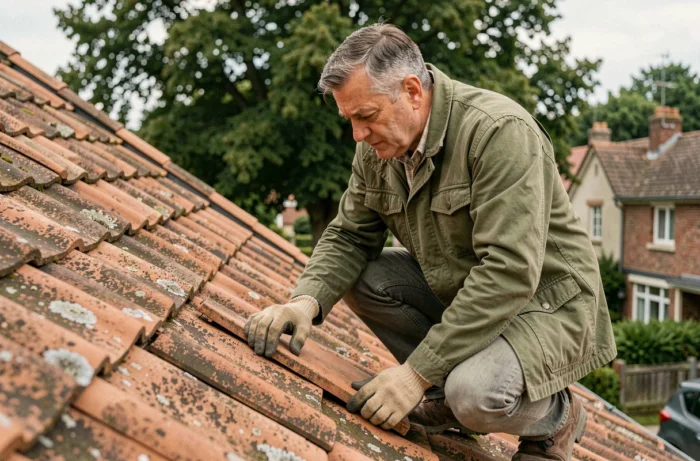
A tile that flies off during a storm, a leak that stains the ceiling of the bedroom: when you own a single-family home or a building without co-ownership, the question of coverage arises quickly. Does home insurance cover the roof? And above all, does it cover the repair of the roof itself or just the damage caused inside? Understanding this distinction can prevent many disappointments on the day of the disaster.
Cause of the disaster and roof coverage: the distinction that contracts impose
Many homeowners believe that their multi-risk home insurance (MRH) protects their roof comprehensively. In reality, it is the cause of the disaster that triggers the coverage, not the condition of the roof.
A concrete example: a storm tears off several tiles, water seeps in and damages an interior wall. The “storm” coverage of the MRH contract covers the damage caused by the weather event, including the restoration of the damaged roof. So far, so good.
Let’s change the scenario. Porous tiles have been allowing moisture to enter for months. The insurer finds that the leak is due to a lack of maintenance or the aging of the roof. In this case, the contract generally excludes coverage. The rule is simple: aging and lack of maintenance are not covered disasters.
To know exactly what your contract covers regarding roofing and leaks, a detailed guide on home insurance on Foncier.net explains the coverage mechanisms applicable to properties outside of co-ownership.
Have you already noticed the mention of “deductible” on your statement of specific conditions? This is the amount that remains your responsibility after compensation. For a roof disaster, this deductible can represent a significant portion of the total cost, especially if the damage is limited to a few tiles.

Owner-occupier, non-occupying landlord: different insurance obligations
In a single-family home, no law requires the owner-occupier to have home insurance. This is a major difference from tenants, who must take out MRH. However, not having insurance remains a risky bet: even a minor disaster on the roof can lead to heavy repair costs.
The situation changes if you rent out your property. The landlord of a property outside of co-ownership should take out non-occupying landlord insurance (PNO). This contract covers damage related to the building, including the roof, when the property is vacant or when the tenant’s insurance is insufficient.
Tenant and roof: who pays for what
The tenant is never responsible for the structural work. The roof is part of the building’s structure, and its maintenance and repair are the owner’s responsibility. However, if a leak damages the tenant’s furniture or personal belongings, it is the tenant’s MRH that covers their own property.
When the owner delays repairing a failing roof and water damage affects the property, the landlord’s civil liability may be engaged. PNO insurance protects the owner against this type of claim.
Coverage to check before signing a roof contract
Not all MRH contracts are equal regarding roof coverage. Before subscribing or renewing, check these elements in your specific conditions:
- The storm, hail, and snow weight coverage: it covers the roof damaged by a sudden weather event, provided that the roof has been properly maintained
- The water damage coverage: it covers the consequences of a leak (walls, ceilings, floors), but often does not cover the repair of the roof itself if the cause is wear and tear
- The natural disaster coverage: activated only after the publication of a ministerial decree, it covers damage related to a natural phenomenon of abnormal intensity
- The “replacement at new” option: without it, compensation takes into account a depreciation coefficient that reduces the amount paid
Why does this detail matter? Because a roof older than ten years automatically suffers a depreciation. Without the new value option, compensation may cover less than half of the actual cost of replacing the materials.

Roof damage claim: steps not to miss
A roof disaster requires a quick response. Here are the steps to follow to maximize your chances of compensation.
Report the disaster within five working days of its discovery (two days in case of theft). This deadline is contractual: exceeding it can lead to a reduction or even a refusal of compensation.
Take photos of the damage before any intervention. Broken tiles, signs of infiltration on the ceiling, damaged furniture: document every visible element. If you need to cover the roof urgently to limit damage, keep the invoices for this temporary intervention.
The expert and the estimate: two decisive pieces
The insurer may appoint an expert to assess the origin and extent of the disaster. If the expert concludes that there is a lack of maintenance, coverage may be denied. That’s why keeping roof maintenance invoices is valuable evidence in case of a dispute.
Get at least one estimate from a roofer before the expert’s visit. This document allows the insurer to estimate the cost of the work and speeds up the processing of the file.
- Written declaration to the insurer with date, nature, and circumstances of the disaster
- Timestamped photos of visible damage (roof and interior)
- Repair estimate from a qualified professional
One last often-overlooked point: if roof work was done less than ten years ago by a professional, the craftsman’s ten-year guarantee may apply. This insurance, distinct from your MRH, covers defects affecting the solidity of the work or making it unsuitable for its intended use. Check the ten-year certificate of the roofer before solely contacting your own insurer.