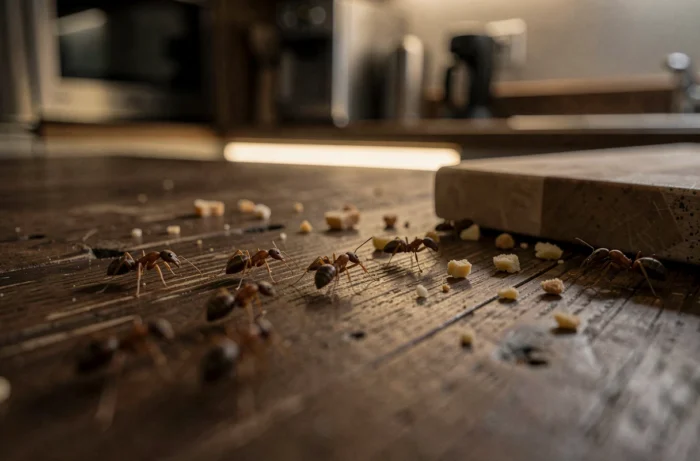
Turning on the kitchen light at two in the morning and seeing silhouettes dart across the countertop is nothing exceptional. Fruit flies, pantry moths, weevils, cockroaches: several species of pests share a common trait, which is to become active when the room is plunged into darkness and silence.
The kitchen meets three conditions that attract them: humidity, residual heat from appliances, and access to food. This explains why this phenomenon is concentrated in this room rather than elsewhere in the home.
The biofilm in drains, an invisible breeding ground for nocturnal insects in the kitchen
Most advice on insects in the kitchen targets the trash can or the fruit bowl. These sources are real, but they mask a much more tenacious reservoir: the biofilm that coats drains and pipes. This organic layer, composed of fats, food residues, and bacteria, serves both as a pantry and a breeding area for psychodid flies (the small sink flies).
Pouring a cleaning product down the drain usually isn’t enough. The biofilm adheres to the internal walls of the drain and resists the liquids that pass through it. To dislodge it, mechanical cleaning is required: disassembling the drain, scrubbing the inside with a brush, and then rinsing with very hot water. This step is what most guides omit, and it is often the reason why fruit flies return a few days after a surface treatment.
As detailed in articles from Animal Liberation, the presence of nocturnal insects in the kitchen rarely stems from a single factor. Identifying the correct infestation source conditions everything that follows.
Forgotten areas of the kitchen that feed pests at night

Beyond the drain, several rarely inspected areas provide insects exactly what they seek: stagnant moisture and micro-organic residues.
- The condensate pan of the refrigerator, located at the back or underneath the appliance, accumulates warm water and traces of organic matter. It’s an ideal breeding site for fruit flies.
- The damp seals of the dishwasher and the gaps between the countertop and the backsplash retain crumbs and moisture that regular cleaning doesn’t reach.
- The sponge left damp overnight and the dirty dishcloths placed on the faucet emit a fermentation odor detectable by insects, even in minute quantities for us.
- The underside and back of appliances (oven, microwave, toaster) where food residues fall and remain invisible for weeks.
Insects become active at night because the room is quiet, without vibrations or light. The warm areas of refrigerator or freezer motors create a favorable microclimate. The combination of silence, warmth, and accessible food transforms the kitchen into an optimal nocturnal habitat.
The particular case of dry goods already contaminated at purchase
Pantry moths and weevils don’t always enter through the window. The infestation often begins in the package of flour or rice purchased at the store. The microscopic eggs can be present in the product even before the packaging is opened. Once in the cupboard, the larvae develop, perforate neighboring thin plastic packages, and gradually colonize all dry foods.
This mode of entry is difficult to prevent at the source. However, systematically transferring dry goods into airtight glass or rigid plastic containers as soon as you return from shopping significantly limits the spread. A contaminated package of flour in a closed jar remains an isolated issue, not the start of an invasion.
Identifying nocturnal insects to adapt the response
Not all insects visible at night in the kitchen are treated the same way. Identification determines the effectiveness of the chosen method.
| Insect | Appearance | Breeding Area | Priority Method |
| Fruit flies (psychodids) | Very small, rounded wings, slow flight | Drains, sinks, condensate pans | Mechanical cleaning of pipes |
| Pantry moths | Small gray-brown butterflies, silk threads in cupboards | Flours, cereals, dried fruits | Sorting dry foods, airtight containers |
| Weevils | Small black beetles with an elongated snout | Rice, pasta, legumes | Freezing suspect goods, sorting |
| Cockroaches | Flattened brown to black body, long antennae | Pipes, behind appliances | Targeted insecticide gel, sealing access points |
A drain fly is not treated like a pantry moth. Confusing the two leads to unnecessary actions: setting pheromone traps when the problem comes from the drain, or cleaning cupboards when larvae are developing in the drain.
Eliminating kitchen insects without excessive chemicals

Once the source is identified, the priority is to eliminate it rather than treat the symptoms. Spray insecticides kill visible individuals but do not reach the eggs or larvae hidden in the biofilm or packaging.
Effective mechanical and preventive actions
- Disassemble and scrub the drains of the sink and dishwasher once a month. Pour boiling water after cleaning to remove remaining residues.
- Empty and clean the condensate pan of the refrigerator every two months. Stagnant water in this pan is an underestimated factor in proliferation.
- Transfer all dry goods (flour, rice, pasta, cereals, spices) into airtight jars. Freeze suspect products for 72 hours to eliminate eggs and larvae of moths or weevils.
- Vacuum behind and under appliances at least once a month. The crumbs accumulated in these areas are invisible but sufficient to sustain a population of insects.
Eliminating the source of moisture and food makes the habitat unsuitable for reproduction. Without a viable breeding site, the population declines within a few weeks without resorting to heavy chemicals.
When to call a pest control professional
If cockroaches are present in numbers or if the infestation of pantry moths persists after a thorough sorting of cupboards and deep cleaning, field reports suggest that targeted professional treatment (bait gel for cockroaches, localized fumigation for moths) yields more lasting results than an accumulation of partial remedies. The persistence of insects despite rigorous cleaning often signals a structural access issue (crack, defective seal, unsealed technical duct) that a professional diagnosis can identify.
The kitchen attracts insects at night for specific and identifiable reasons. Acting on the right source, whether it’s the drain, the cupboard, or a structural access point, produces results much faster than multiplying surface repellents. Regular mechanical cleaning of hidden areas remains the most effective long-term measure.