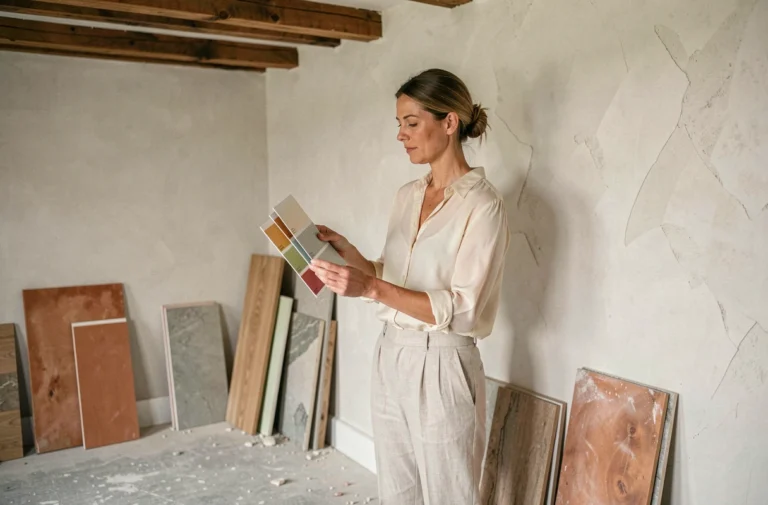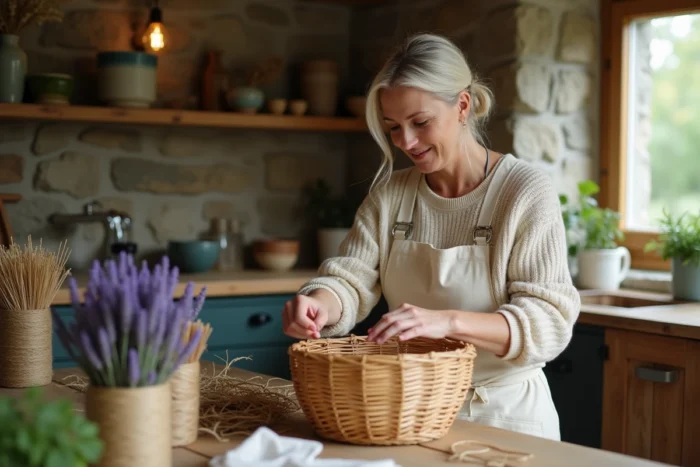
A smooth plaster wall, a flat-pack sofa, shelves identical to those of the neighbor: this is often where we start. Transforming this interior into a handcrafted cocoon doesn’t require tearing everything down, but rather gradually replacing standardized elements with living materials and handmade objects. The result depends less on a budget than on concrete choices regarding textiles, finishes, and sourcing.
Handcrafted textiles and natural materials: where to start concretely
When you want to warm up a room without repainting or moving furniture, textiles are the quickest lever. A handwoven wool blanket, raw linen cushions, or a hand-dyed cotton tablecloth can change the perception of a living room in just a few minutes.
The difference with industrial textiles is felt in the touch and seen in wear. A handmade cushion cover made from natural fibers develops a patina, while a synthetic fabric pills. We prioritize linen, thick cotton, and untreated wool. These materials better regulate humidity and maintain their shape over time.
To source these pieces without spending hours online, specialized marketplaces for handcrafted creations (like Fait2mains or Artisans du Monde shops) allow filtering by material and technique. You can find textiles made in small batches, often accompanied by the artisan’s name and place of manufacture. On www.coeur-artisan.com, the home category also groups these types of pieces by universe.
A well-chosen handcrafted textile ages better than a new industrial textile. This is the criterion that should guide every purchase: not the appearance in the store, but the durability after two years of daily use.

Repurposing found objects for a unique artisanal decor
Articles discussing handcrafted cocooning rarely mention creative repurposing, yet this is often what gives the most character to an interior. Here, we talk about reclaiming an existing object (a wooden crate, an old cake mold, a jar, an attic ladder) and assigning it a new decorative or utilitarian function.
Basic technique for preparing a reclaimed object
- Clean the surface with soapy water, then lightly sand with medium-grit sandpaper to remove splinters or superficial rust
- Apply a natural wax or linseed oil to the raw wood to nourish the material without masking its history
- Customize if necessary with glued fabric, chalk paint, or a handmade stencil to integrate the object into the room’s palette
An old wine crate laid on its side becomes an open bedside table. A set of Le Parfait jars lined up on a shelf serves as storage for spices or brushes. Repurposing works when the object retains a visible trace of its previous life. We are not seeking perfection; we are seeking uniqueness.
Opinions vary on this point, but many upcycling enthusiasts advise against over-refining the object. A natural patina tells a story that a fresh coat of paint erases.
Handmade ceramics and signature objects in the living room
Handcrafted ceramics are probably the most direct way to introduce a signature piece into an interior. A hand-turned bowl on a coffee table, a glazed stoneware vase on the floor, a series of small bowls on a shelf: these objects attract the eye because they bear the marks of the making process.
Each piece of handmade ceramics is slightly different from the next. It is precisely this apparent flaw that creates authenticity. Artisan marketplaces and local workshops open to the public often allow you to see the manufacturing process, which helps you make an informed choice.
Combining ceramics and wood for a cozy atmosphere
Matte stoneware pairs well with light woods (beech, ash). Dark glazed stoneware (navy blue, forest green) goes better with walnut or smoked oak. It is best to avoid mixing more than two or three families of materials on the same piece of furniture to prevent visually overcrowding the space.
A often-overlooked tip: place ceramics on a textile support (linen placemat, piece of felt) rather than directly on the wood. The texture contrast enhances the presence of each object and protects the surface of the furniture.

Artisanal lighting: warm light and raw materials
Lighting radically changes the ambiance of a room, but we rarely think of replacing an industrial fixture with a handcrafted piece. A woven wicker pendant, a Japanese paper lampshade, or a table lamp with a turned wood base diffuses a soft light that enhances the cozy atmosphere of a living room or bedroom.
Ideally, combine three light sources per room: a soft general lighting (pendant or ceiling light), an accent light (handcrafted table lamp on a low piece of furniture), and candles. Homemade candles, poured into reclaimed containers, add a sensory layer with their flickering light and subtle fragrance.
- Natural fiber pendant (rattan, wicker, raffia) for the living room or dining room
- Table lamp in ceramic or turned wood for the bedroom or reading nook
- Handcrafted vegetable wax candles in stoneware pots for evenings
Multiplying low light sources creates a visual depth that a ceiling light alone cannot provide. You gain warmth without touching the paint or furniture.
An artisanal interior is not built in a weekend. You accumulate pieces over time, replacing one industrial object at a time. The final result is a space where each element has been chosen, not endured, and where natural materials, ceramics, and wood tell a story that mass-produced furniture can never offer.