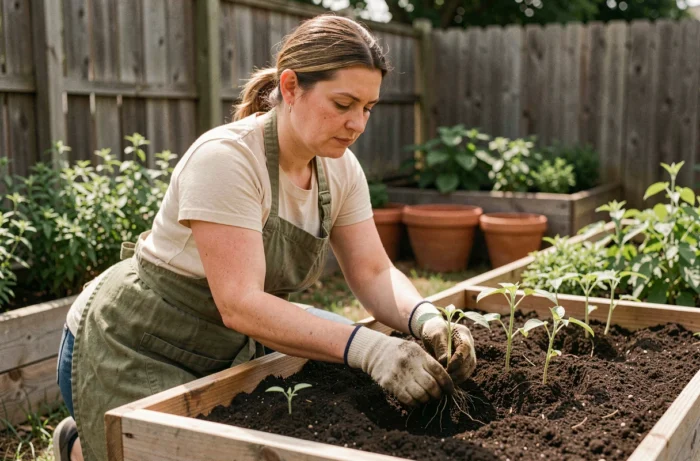
Organic gardening is based on a precise technical principle: to cultivate without synthetic plant protection products or chemical fertilizers, relying on the natural cycles of soil and biodiversity. Since January 1, 2019, the Labbé law prohibits amateur gardeners from purchasing, using, or storing synthetic plant protection products. Only products labeled “EAJ – Authorized for Use in Gardens” remain accessible.
Therefore, organic gardening at home is no longer just a personal choice; it is the legal framework in force.
Labbé Law and the 2027 Deadline: What the Regulatory Framework Changes for the Vegetable Garden
The Labbé law has removed access to synthetic pesticides for individuals. In practice, this means that the only treatments available in garden centers belong to three categories: biocontrol products, low-risk products, and those usable in organic farming.
The next regulatory step concerns fertilizers. The Climate and Resilience law provides for the prohibition of synthetic mineral fertilizers for non-agricultural uses by January 1, 2027 at the latest. For an amateur gardener, this makes mastering composting and organic amendments essential right now, rather than facing the transition at the last moment.
In concrete terms, reading labels becomes a useful reflex. The EAJ mention on the packaging guarantees that the product is authorized for garden use. A product without this mention, even sold online, exposes one to an infraction. Resources like jardinage-bio.com help navigate practices compliant with this regulation.

Soil Fertility in Organic Vegetable Gardens: Building Living Soil Without Chemical Fertilizers
A fertile soil in organic gardening is not fed; it is built. The difference is fundamental: a chemical fertilizer provides soluble nutrients directly to the plant, while an organic amendment first feeds the soil microorganisms, which then make the nutrients available to the roots.
Compost as a Fertilization Base
Mature compost replaces almost all synthetic fertilizers for a home vegetable garden. Kitchen waste (peels, coffee grounds, crushed eggshells), dead leaves, dried grass clippings: these materials, mixed by alternating dry and wet layers, produce a rich amendment in a few months.
The often-overlooked technical point concerns the carbon/nitrogen balance. Green waste (peels, fresh clippings) provides nitrogen. Brown waste (dry leaves, unprinted cardboard, twigs) provides carbon. Compost that smells bad generally lacks carbon material.
Mulching: Protecting and Nourishing Simultaneously
Covering the soil between plants with organic mulch (straw, dead leaves, chipped branches) serves several functions at once:
- It limits evaporation and reduces watering frequency, a direct advantage for the vegetable garden’s water consumption
- It prevents the germination of weeds by depriving them of light, eliminating the need for chemical weeding
- As it decomposes, it enriches the top layer of soil with organic matter, feeding microbial life
A mulch of a few centimeters thick is sufficient for a lasting effect over a season. Renewing it as decomposition occurs keeps the coverage active.
Crop Rotation and Plant Associations: Two Pest Control Levers
In organic gardening, pest and disease management primarily relies on prevention. Two complementary techniques form the foundation of this approach: crop rotation and plant associations.
Crop Rotation in the Vegetable Garden
Growing the same vegetables in the same location each year encourages the accumulation of specific pests in the soil. A rotation cycle of three to five years depending on plant families breaks this mechanism. Legumes (beans, peas, fava beans) fix atmospheric nitrogen in the soil, benefiting nutrient-hungry crops (tomatoes, squash) planted in the same location the following year.
For a small space, dividing the vegetable garden into three or four zones and rotating the botanical families from one zone to another each season is enough to limit pest pressure.
Plant Associations in the Organic Garden
Certain plants have a repellent effect on pests of their neighbors. Aromatics (thyme, sage, lavender) disrupt harmful insects with their volatile compounds. Sowing radishes at the same time as carrots is a proven organic farming technique: radishes germinate quickly, mark the row, and aerate the soil for the slower-germinating carrots.

Organic Seeds and Plants: Choosing Seeds for an Autonomous Vegetable Garden
The quality of seeds directly determines the success of the vegetable garden. Prioritizing seeds from organic farming guarantees the absence of surface chemical treatment, a point consistent with the overall approach of organic gardening.
Heirloom and reproducible varieties have an often-overlooked advantage: they allow for harvesting one’s own seeds at the end of the season to re-sow the following year. Hybrid F1 seeds, on the other hand, do not produce stable descendants.
Here are some guidelines for successful sowing without treatment:
- Soaking seeds in a horsetail decoction before sowing reduces the risk of damping-off, a common fungal disease in young plants
- Staggering sowings over time (every two to three weeks) allows for staggered harvests and limits losses in case of climatic hazards
- Transplanting seedlings into the ground after the last frosts, in already mulched and amended soil, provides the best conditions for recovery
Harvesting one’s own seeds from the best plants is the first step towards a truly autonomous vegetable garden, adapted to its soil and local microclimate.
Biodiversity in the Garden: Promoting Natural Allies
An effective organic garden does not seek to eliminate all insects. It aims for a balance where allies (ladybugs, lacewings, hoverflies, hedgehogs) naturally regulate pest populations. Leaving a corner of the garden wild, with tall grasses and a few wood piles, provides habitat for these allies.
Installing a water point, even modest (a dish filled with gravel and water), attracts pollinators and aphid predators. Plant diversity in a small space protects better than treatment, because it creates a resilient ecosystem rather than a sterile environment dependent on external interventions.
The transition to a fully organic vegetable garden generally takes two to three seasons. The soil needs time to rebuild its microbial life after years of conventional farming. The first harvests may seem less abundant, but the taste quality and resilience of the plants improve as the garden’s ecosystem balances.